
Maximising Customer Retention with Salesforce Loyalty Management
Organisations struggle to support continuous improvement and change, with 55% failing to reach their goals. Salesforce managed services have become an innovative solution for internal teams facing this challenge. The...
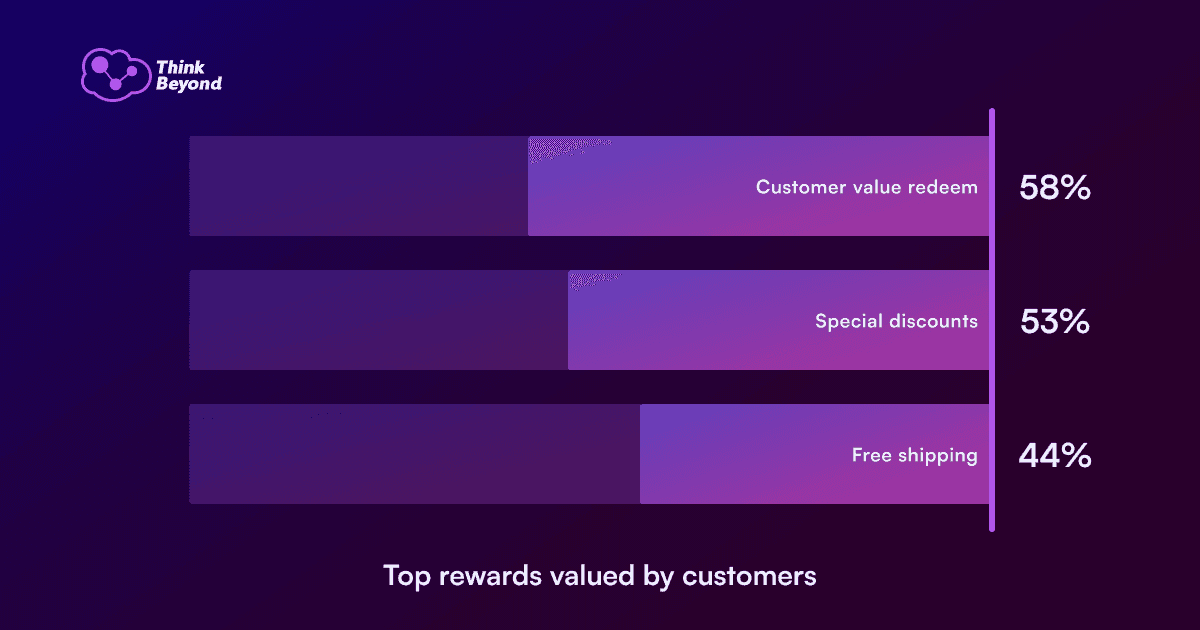
Modern loyalty strategies have evolved significantly beyond transactional discounting. To retain market share in a highly competitive digital landscape, organisations must architect experiences that drive genuine engagement. According to the Salesforce Connected Shoppers Report, the top rewards valued by customers include:
- Earning points to redeem (58%)
- Special discounts (53%)
- Free shipping (44%)
- Birthday rewards (22%)
- Free or discounted services, such as styling or installation (20%)
(Source: Connected Shoppers Report, Fifth Edition, Salesforce 2023)
Addressing these expectations requires enterprise-grade technology. Implementing Salesforce loyalty management provides marketers and business leaders with the infrastructure necessary to meet and exceed these demands, systematically reducing customer churn.
[CTA] Align your customer retention strategy with enterprise-grade technology. Contact Think Beyond Experts today.
Core Types of Loyalty Programmes Offered by Salesforce
Salesforce loyalty management is a comprehensive solution designed to help businesses create and manage effective reward ecosystems. Operating within the Salesforce Customer 360 platform, it empowers companies to develop scalable loyalty initiatives for both B2B and B2C audiences.
The platform’s customisable architecture supports multiple operational models:
- Tiered Loyalty Programmes: These reward customers based on their spending levels or engagement frequency. As customers ascend through tiers, they unlock increasingly valuable benefits, encouraging sustained engagement.
- Point-Based Loyalty Programmes: This common model allows customers to earn points for every purchase. These points can then be redeemed for rewards, encouraging frequent purchases and simplifying interaction tracking.
- Subscription-Based Loyalty Programmes: Customers pay an upfront fee for access to exclusive benefits, such as free shipping or exclusive discounts.
- Value-Based Loyalty Programmes: These focus on rewarding customers for their alignment with the brand’s values, allowing them to earn rewards through socially responsible actions.
Architectural Features Enhancing Loyalty Strategy
Successful communication and product design in the high-tech sector rely on progressive disclosure; presenting the right capabilities at the right time without overwhelming the user. Salesforce applies this principle through a suite of automated, highly structured features.
Promotion Setup and Automation
Salesforce simplifies and automates complex loyalty processes, such as crediting and debiting member points, changing member tiers, and updating records. Users can define precise business scenarios using rules that specify conditions and actions, or utilise predefined templates to accelerate deployment.
Data Processing Engine (DPE) and Decision Tables
The Data Processing Engine allows organisations to transform available data and write the results back to standard or custom objects, significantly enhancing data management capabilities. Coupled with Decision Tables, which determine the number of points awarded based on member activities, the system ensures rewards are perfectly aligned with customer engagement.
Flows and Batch Management
Flows automate business operations by reading or writing Salesforce data and executing logic to ensure seamless system interactions. For enterprise scale, Batch Management automates the processing of high volumes of records according to rules defined in Promotion Setup or Flows, driving operational efficiency and accuracy.
Experience Cloud Templates
Experience Cloud Templates for Salesforce loyalty management help businesses effectively visualise and manage their portals. They allow organisations to customise the site with specific branding, ensuring the loyalty members’ experience remains smooth and intuitive. With these templates, businesses can rapidly deploy a feature-rich portal for members to access programme information, rewards, and promotions.
[CTA] Ready to architect a scalable reward system? Contact us to explore bespoke Salesforce integrations.
Driving Business Success Through Strategic Engagement
Implementing loyalty management software from Salesforce offers substantial commercial benefits. By treating information architecture as a foundational element of the business strategy, organisations can radically lower operational costs and improve user conversion.
- Unifying Customer Data: The software utilises data collected through the CRM platform to create a comprehensive source of truth. This enables the creation of programmes precisely tailored to customer behaviour and needs.
- Personalising the Experience: Leveraging the Customer 360 View allows businesses to personalise rewards, transforming standard buyers into brand advocates across multiple touchpoints.
- Consolidating Platforms: Salesforce enables organisations to run multiple loyalty programmes on a single, highly adaptable platform. Its intuitive interface simplifies alignment with brand identity.
- Marketing Automation Integration: Integration with Marketing Cloud facilitates the setting of triggers for loyalty-related actions, enhancing efficiency and providing easy-to-use analytics for performance tracking.
UK Market Context: The Shift in B2B Loyalty
Within the UK market, particularly amidst evolving data privacy regulations (UK GDPR) and a highly competitive B2B tech sector, establishing first-party data strategies through robust loyalty frameworks has become a boardroom priority. UK decision-makers are increasingly shifting away from legacy discount structures, demanding intelligent, data-driven reward ecosystems that foster long-term vendor partnerships and measurable ROI.
Tangible Commercial Outcomes
A well-designed loyalty programme powered by Salesforce yields remarkable results:
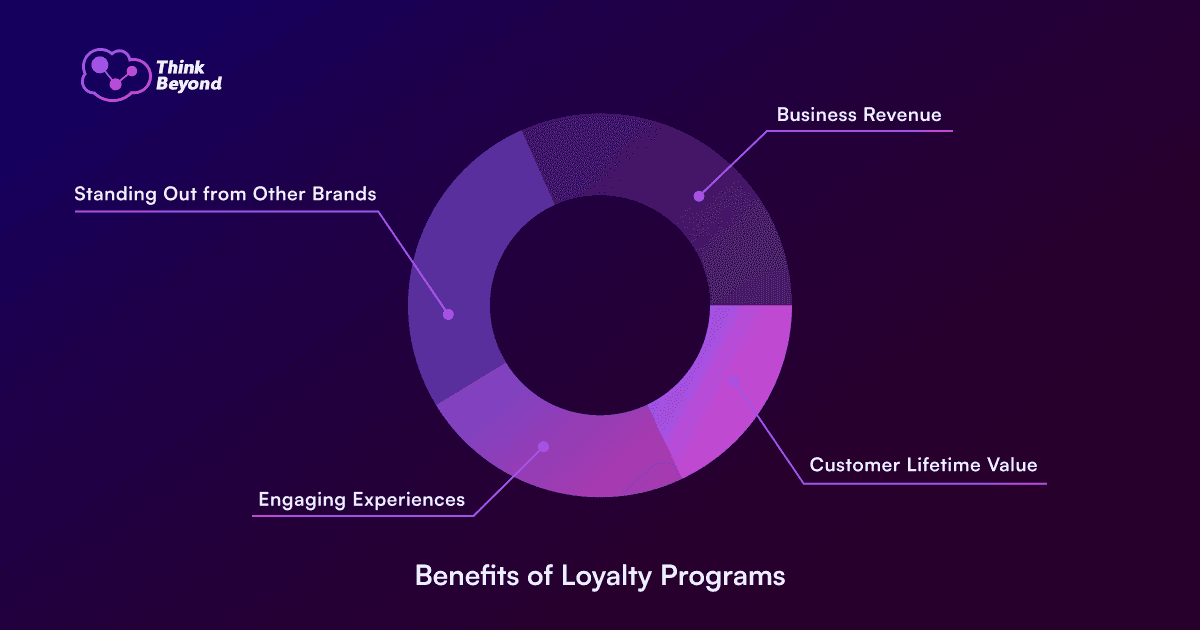
- Boosting Business Revenue: Targeted programmes incentivise deeper brand engagement, encouraging repeat purchases through valuable rewards.
- Increasing Customer Lifetime Value (CLV): Loyal customers typically spend more, refer others, and remain engaged during market fluctuations.
- Standing Out from Competitors: Unique and compelling loyalty initiatives act as a powerful market differentiator.
- Driving Desired Actions: Programmes can be structured to incentivise specific behaviours, such as writing reviews or referring peers, aligning directly with broader commercial objectives.
Through careful planning and technical design, your loyalty strategy can transcend generic discounting to become a central pillar of your revenue operations.
[CTA] Maximise your customer lifetime value today. Contact the Salesforce partner, Think Beyond Experts, to initiate your project discovery phase.
Frequently Asked Questions (FAQ)
How long does a typical Salesforce Loyalty Management implementation take?
Deployment timelines vary based on the complexity of your data architecture and existing CRM ecosystem, but standard enterprise implementations typically range from 12 to 16 weeks from scoping to launch.
Is this solution suitable for B2B organisations, or is it strictly B2C?
Salesforce loyalty management is highly effective for both models. In B2B environments, it is often used to incentivise channel partners, reward long-term contract renewals, and drive product adoption.
How does the platform handle data security and compliance?
Built on the core Salesforce platform, the loyalty management module inherits enterprise-grade security protocols, ensuring full compliance with UK GDPR and providing robust data governance.
Can it integrate with third-party ERP or POS systems?
Yes. Salesforce utilises an API-first architecture, allowing seamless data integration with legacy ERPs, point-of-sale systems, and custom e-commerce platforms.
How do we measure the ROI of the programme?
The platform integrates directly with Salesforce CRM and Marketing Cloud, providing granular analytics on customer acquisition cost (CAC), customer lifetime value (CLV), redemption rates, and incremental revenue generated by loyalty members.
Topics
Keep reading
All posts-
 E-Commerce 7 min read
How to Build a Salesforce Loyalty Management Strategy That Retains Customers
 Adrian Gawryszewski Head of Technology 14 July 2026 Read the article
 - E-Commerce 5 min read
How to Overcome the Challenges of Building and Managing Loyalty Programmes
Adrian Gawryszewski Head of Technology 10 July 2026 Read the article - E-Commerce 6 min read
Evolve Your Loyalty Program into a Loyalty Experience with Salesforce Solutions for E-Commerce
Adrian Gawryszewski Head of Technology 29 October 2024 Read the article