
Why Omnichannel Customer Service Is a Strategic Imperative for the Modern Enterprise
Omnichannel customer service is no longer a differentiator — it is a commercial necessity for organisational integrity and customer retention. Salesforce establishes a Single Source of Truth across every channel, so agents resolve cases faster and leaders cut operational overhead. This guide sets out the strategic review, technology architecture, and governance model that separates organisations that talk about "omni" from those that deliver it.
For several years, industry commentary has treated multichannel, cross-channel, and omnichannel as interchangeable buzzwords. They are not. Only a true omnichannel model delivers consistent value to the customer — and, in turn, measurable return to the business. Multichannel presence without integration simply multiplies the places where an organisation can disappoint someone.
Building this model demands more than good intentions. It requires rigorous analysis, a clear-eyed view of technical debt reduction, and a willingness to redesign customer service processes rather than bolt new tools onto old ones. As channel proliferation accelerates and consumer expectations rise — in both B2C and B2B markets — omnichannel service has moved from competitive advantage to baseline requirement.
Before you read on: Ask your leadership team one question — can any agent, on any channel, see a customer's complete history in a single screen? If the honest answer is no, your organisation is not yet omnichannel; it is multichannel with a better logo. When you are ready to close that gap, explore Think Beyond's Salesforce e-commerce and customer experience solutions.
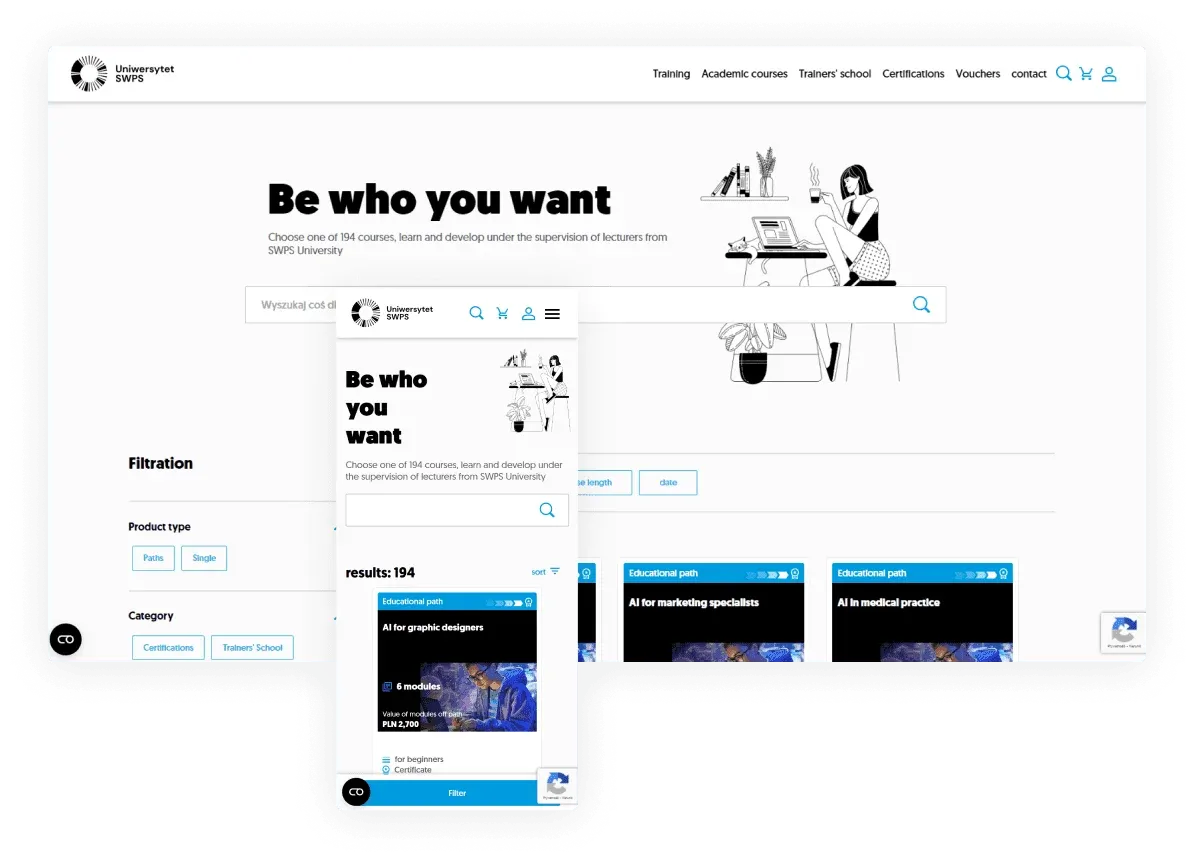
A well-executed omnichannel model does not stay theoretical. Think Beyond's e-commerce platform build for SWPS University demonstrates the principle in practice: a single Salesforce Experience and Education Cloud platform unified course sales, personalised recommendations, and multi-channel communication for 17,500 students across six campuses, replacing fragmented, manual processes with one governed system of record.
At a Glance: Omnichannel Challenges and Outcomes
| Challenge | CRM Response | Outcome to Measure |
|---|---|---|
| Fragmented customer data across channels | Unified Salesforce record as Single Source of Truth | Reduction in duplicate customer records |
| Agents switch between multiple systems to resolve one case | Consolidated console view of full interaction history | Average handle time per case |
| Customers repeat their issue across channels | Cross-channel case continuity | First-contact resolution rate |
| Inconsistent service standards between teams | Standardised processes and governance model | Customer satisfaction (CSAT) score |
| Manual handoffs slow escalations | Automated routing and workflow rules | Escalation-to-resolution time |
Step One: The Strategic Review
Omnichannel is a strategy, not a feature list. It requires a structured strategic review of current processes across every communication and service channel. The starting assumption should not be "where can we have a presence," but "how do we design the interactions between channels — and beyond them — around the steps the customer actually takes."
Leaders should examine:
- How customers research, evaluate, and purchase — because the answer rarely maps to a single channel or department.
- Where customers look for information and how they build knowledge before making a decision.
- Which devices customers use at each stage of the purchasing process.
- Which delivery or collection method customers prefer.
- How customers contact the organisation when something goes wrong after purchase.
The omnichannel philosophy assumes presence where the customer already is, with consistent quality of experience regardless of time, place, or channel. That consistency is what protects organisational integrity when a case moves from chat to phone to a service portal.
Step Two: Architecture and Tool Selection
Customer journey mapping turns the strategic review into a working model. It identifies every point where a customer interacts with a department and reflects those touchpoints in the right service process or publishing channel — building a coherent architecture of brand contact rather than a patchwork of disconnected tools.
At this stage, the CRM platform itself becomes the decisive factor. It must integrate every supported communication channel and aggregate the full contact and transaction history for a given customer — and, where relevant, their broader account or household. This is the technical foundation of a Single Source of Truth, and it is what prevents omnichannel ambitions from collapsing under data sovereignty and data governance gaps.
A single console view of every interaction lets a Customer Care consultant resolve a reported problem faster. According to Salesforce research, agents without this view can click through up to ten separate applications, screens, or windows to assemble one customer's history. Consolidating that view improves both agent productivity and customer experience — customers no longer repeat the same case multiple times. The design principle that matters most here: omnichannel value comes as much from what agents no longer have to do as from new capability.
Step Three: Implementation and Governance
Effective implementation demands sustained commitment, not a single project milestone. It is not only about process design and IT architecture — it is about directing every person who interacts with customers toward a consistent mode of service. Omnichannel places the customer at the centre of company activity and requires consistent, high-quality experience at every touchpoint.
Technology alone does not build this culture. Organisations need:
- A shared mission communicated across every customer-facing team.
- Structured training tied to the new service model.
- Substantive operational support during the transition.
- A motivation and accountability system that reinforces the standard.
A Strategic Partner that understands business processes — not just Salesforce configuration — translates the conclusions of the strategic review into the right technical architecture. That combination of business fluency and platform expertise is what turns a CRM rollout into genuine digital transformation.
Metrics That Prove Omnichannel Impact
Leaders should track a defined set of KPIs to demonstrate the return on an omnichannel investment, rather than relying on anecdotal feedback:
- First-contact resolution rate — the percentage of cases closed without a channel switch or repeat contact.
- Average handle time — time per case, benchmarked before and after console consolidation.
- CSAT and NPS by channel — satisfaction scores segmented by channel to expose weak points.
- Case reassignment rate — how often a case moves between agents or departments before resolution.
- Customer effort score — a direct measure of how much work a customer does to get an answer.
- Channel migration rate — the share of customers who start on one channel and complete on another without friction.
These metrics turn omnichannel from an aspiration into a governed, measurable programme — the standard a strategic review should hold leadership accountable to.
How Think Beyond Helps You Build a Resilient Omnichannel Ecosystem
Think Beyond acts as a Strategic Partner for organisations building resilient digital ecosystems around Salesforce — not as a vendor delivering a single point solution. Our engagement typically covers:
- Strategic review of current customer service processes and channel architecture.
- Salesforce Service Cloud and platform design built around a Single Source of Truth.
- Integration across e-commerce, communication, and back-office systems.
- Governance frameworks for data sovereignty and ongoing data governance.
- Change management and training to embed the new service standard organisation-wide.
- Reporting and KPI dashboards to prove measurable ROI.
Ready to close the gap between multichannel and true omnichannel? Initiate a Strategic Review with Think Beyond.
Think Beyond solutions are delivered under GDPR-compliant, ISO 27001–certified, Salesforce Certified standards, with military-grade 256-bit encryption safeguarding every customer interaction.
Frequently Asked Questions
What is the difference between multichannel and omnichannel customer service?
Multichannel means an organisation is present on several channels independently. Omnichannel means those channels are integrated around a single customer record, so the experience stays consistent regardless of where the customer starts or finishes.
Why does Salesforce support a Single Source of Truth for customer service?
Salesforce consolidates every channel, transaction, and interaction into one governed customer record, which eliminates duplicate data and gives agents the full history needed to resolve a case without repeated questions.
How long does an omnichannel Salesforce implementation take?
Timelines depend on the number of channels, systems to integrate, and the depth of the required strategic review. A structured Strategic Review at the outset defines a realistic scope and timeline before implementation begins.
What KPIs prove that an omnichannel strategy is working?
First-contact resolution rate, average handle time, channel-level CSAT, and customer effort score are the core indicators leadership should track to validate ROI.
Does omnichannel service require replacing existing systems?
No. Salesforce integrates with existing systems rather than requiring wholesale replacement, which supports technical debt reduction without disrupting operations already in place.
Key Public Sources Referenced
- Salesforce Research — agent productivity and multi-application service data
- Salesforce State of the Connected Customer report
- McKinsey Digital — customer care and service transformation research
- Gartner — customer experience and CRM technology research
Keep reading
All posts-
 Customer Experience 7 min read
How to Build a Seamless Omnichannel Sales Strategy in Salesforce
 Martin Pieńkowski Head of Salesforce 15 July 2026 Read the article
 - Customer Experience 6 min read
How Omnichannel Self-Service Transforms B2C Customer Support
Martin Pieńkowski Head of Salesforce 13 July 2026 Read the article - Customer Experience 7 min read
Agentforce Service Agent in Salesforce: A Strategic Guide for Decision-Makers
 Adrian Gawryszewski Head of Technology 8 July 2026 Read the article