Customer satisfaction determines SaaS revenue. It is not a soft metric reserved for the marketing team; it is a leading indicator of churn, expansion revenue, and brand advocacy. Executive boards that treat satisfaction data as a strategic asset — rather than an afterthought — protect recurring revenue and reduce the cost of acquiring new customers.
The challenge is converting a feeling into a number. Three metrics solve this problem in different ways: NPS (Net Promoter Score), CES (Customer Effort Score), and CSAT (Customer Satisfaction Score). Choosing the right one, at the right moment, is a strategic decision — not a technical afterthought.
Before you read on: does your team currently track satisfaction with a single metric, or does it blend CSAT, NPS, and CES across the customer journey? If you are relying on a single number, or on manual spreadsheets pulled together after the fact, the sections below will show you where the gaps sit. When you are ready, explore your customer feedback readiness with Think Beyond.
At a Glance: Measuring Customer Satisfaction in SaaS
| Challenge | CRM response | Outcome to measure |
|---|---|---|
| Feedback arrives too late to act on | Automated, trigger-based CSAT surveys sent at the moment of interaction | Response rate and time-to-resolution |
| Diverse customer segments need different questions | Segmented survey logic built on CRM data (industry, plan tier, usage) | Satisfaction score by segment |
| Quantitative scores hide the "why" | Open-ended fields paired with quantitative scales | Qualitative theme frequency vs. score trend |
| Feedback sits in silos, disconnected from account data | Centralised feedback platform integrated with the CRM | Single customer view across support, product, and billing |
Why customer satisfaction surveys matter to SaaS companies
Customer surveys give SaaS leaders a direct line to user sentiment. They surface areas for improvement, benchmark customer happiness over time, strengthen brand loyalty, and turn satisfied users into active advocates. Four commercial outcomes stand out.
Improvement
Customer satisfaction surveys work as a compass. They pinpoint gaps in the product and service experience, which strengthens overall satisfaction and loyalty. SaaS businesses that gather structured feedback from users make targeted enhancements instead of guessing at priorities.
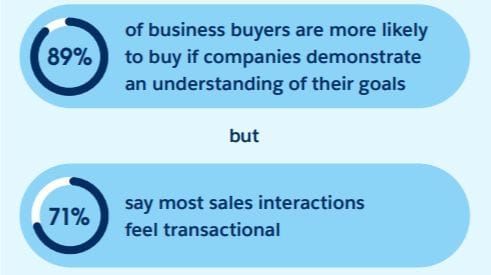
Source: State of the Connected Customer, Fifth Edition, Salesforce, 2022
Brand awareness
Structured survey questions let companies assess marketing effectiveness, understand what resonates with their audience, and adjust strategy accordingly. This insight strengthens brand awareness and clarifies the differentiators that separate a SaaS provider from its competitors.
71% of consumers switched brands at least once in the past year.
Source: State of the Connected Customer, Fifth Edition, Salesforce, 2022
Brand advocacy
Happy customers become enthusiastic advocates who tell others about their positive experiences. Word-of-mouth promotion builds brand reputation, attracts new customers, and meaningfully improves customer retention. Teams that understand satisfaction drivers build loyalty and long-term relationships — turning users into advocates of the SaaS brand.
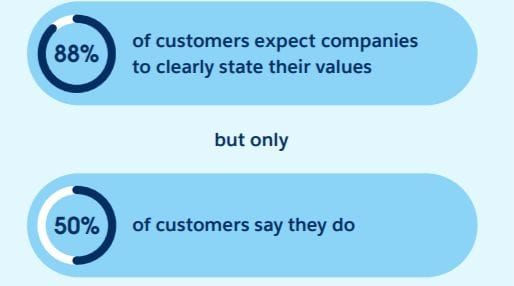
Source: State of the Connected Customer, Fifth Edition, Salesforce, 2022
Benchmarking
Customer satisfaction surveys form the foundation for benchmarking customer happiness. By tracking satisfaction levels over time, SaaS companies monitor progress and set goals for continuous improvement. Customer surveys are strategic instruments, not questionnaires — they empower SaaS companies to compete in an evolving market.
What challenges do SaaS businesses face in measuring customer satisfaction?
Measuring customer satisfaction in SaaS is genuinely hard, and each obstacle demands a distinct response. The most common challenges include:
- A diverse customer base with unique needs: SaaS platforms often serve a wide range of industries, each with distinct preferences and expectations. A project management tool, for example, may serve tech start-ups and established corporations simultaneously, and each segment requires tailored features. Capturing relevant feedback means designing surveys that account for these differences.
- Real-time feedback demands: In today's fast-moving digital environment, customers expect prompt responses and resolutions. SaaS companies frequently struggle to collect timely feedback that lets them address issues before they escalate. A customer who hits a technical glitch needs a swift resolution; a delayed survey misses the chance to capture real-time sentiment.
- Balancing quantitative and qualitative data: Quantitative data delivers numerical insight; qualitative data reveals the nuance and emotion behind the numbers. A comprehensive view of customer satisfaction requires the right balance of both, particularly in SaaS. A high Customer Satisfaction Score (CSAT) might suggest customers are happy, but without open-ended questions, a company can miss specific pain points that matter for long-term loyalty.
SaaS businesses that want an accurate read on satisfaction must navigate diverse customer segments, build real-time feedback loops, and combine quantitative rigour with qualitative depth.
Case study: turning manual, paper-based processes into a single digital source of truth
Think Beyond faced a comparable challenge with SWPS University, where a fragmented, partly paper-based evaluation process made it difficult to capture consistent, timely feedback across 17,500 students and six campuses. By moving the entire workflow onto Salesforce Experience Cloud — with role-based access, automated notifications, and digital confirmation — the university replaced ad hoc data collection with a single, auditable system. The same principle applies directly to SaaS feedback programmes: centralising data collection removes the friction that causes feedback to arrive late, inconsistently, or not at all.
How to determine the most appropriate survey metric
Customer Satisfaction Score (CSAT) surveys give SaaS businesses a reliable way to gauge and improve customer satisfaction. Four characteristics define a strong CSAT survey:
- Simplicity: A straightforward question asks customers to rate their satisfaction with a product, service, or interaction on a numerical scale. This simplicity increases participation and response rates.
- Directness: Questions explicitly measure overall satisfaction, typically using a 1–5 or 1–10 scale. This direct approach produces specific, actionable feedback that lets businesses pinpoint improvement areas with precision.
- Versatility: Teams can deploy CSAT surveys at multiple touchpoints — after a support interaction, following a purchase, or after product use — giving a full view of satisfaction across the entire customer lifecycle.
- Effectiveness: CSAT works well for measuring transactional satisfaction. Businesses interpret results easily, since the score presents as a percentage of satisfied customers.
CSAT, measured as a percentage, directly evaluates overall customer satisfaction. How does it differ from NPS (Net Promoter Score) and CES (Customer Effort Score)?
| CSAT | NPS | CES | |
|---|---|---|---|
| Focus | Measures overall satisfaction with a specific interaction, product, or service. | Measures the likelihood that customers will recommend a product or service. | Measures the ease with which customers achieve their goals or complete tasks. |
| Questions | Uses a rating scale (e.g. 1–5 or 1–10) to assess satisfaction. | Asks customers to rate recommendation likelihood on a 0–10 scale and categorises them as promoters, passives, or detractors. | Poses a direct question about the ease of the customer experience. |
| Timing | Measures transactional satisfaction at specific touchpoints in the customer journey. | Provides insight into long-term loyalty and advocacy, tracked over time. | Focuses on the immediate, recent customer experience. |
| Purpose | Captures feedback on a specific aspect or interaction to enable targeted improvements. | Emphasises the likelihood of customer advocacy and measures overall brand loyalty. | Assesses the perceived effort customers invest in reaching their objectives, highlighting where to streamline processes. |
| Interpretation | Produces a percentage score indicating the proportion of satisfied customers. | Categorises respondents as promoters, passives, or detractors; NPS equals the percentage of promoters minus the percentage of detractors. | Uses a numerical scale, where lower scores indicate a more seamless customer experience. |
| Applicability | Applies across a wide range of touchpoints in the customer journey. | Suits assessment of overall brand loyalty and advocacy. | Identifies friction points in the customer experience. |
All three metrics share one goal: assessing and improving customer satisfaction. Their approaches differ. NPS emphasises advocacy, CES prioritises ease of use, and CSAT focuses on specific interactions.
Metrics that prove SaaS customer satisfaction impact
Tracking a single score in isolation tells leaders little. To prove the commercial impact of a satisfaction programme, track these metrics together:
- CSAT trend over time: a rising or falling percentage across quarters, not a single snapshot.
- NPS by customer segment: loyalty scores broken down by plan tier, industry, or account size to reveal where advocacy concentrates.
- CES at key friction points: onboarding, support tickets, and renewal — the moments most likely to predict churn.
- Response rate: a low response rate signals survey fatigue or poor timing, undermining the reliability of every other number.
- Churn correlation: the relationship between satisfaction scores and actual account cancellations, which validates whether the metrics predict revenue risk.
- Time-to-resolution for detractor feedback: how quickly the business closes the loop with dissatisfied customers, a direct driver of retention.
How to craft outstanding CSAT surveys
CSAT surveys help businesses identify patterns and draw meaningful conclusions. Following best practice produces feedback that makes customers happier and more loyal.
Consider timing
Send CSAT surveys immediately after a customer uses your product or service. This timing improves the accuracy and relevance of their responses.
Optimise for mobile
Make the survey easy to access and complete on a smartphone, so customers can respond whether they are on the go or at a desktop.
Keep it short and clear
Customers respond more often when a survey respects their time. Use plain language and avoid jargon so every question stays clear.
Use multiple channels
Offer responses through several channels to accommodate different customer preferences. Email, SMS, and in-app notifications together raise the overall response rate.
Allow free responses
Open-ended questions let customers express their thoughts in their own words, adding qualitative depth. This layer of feedback surfaces nuanced opinions and specific improvement areas that a pure numerical score misses.
Businesses must convert survey results into actionable strategies. Without that step, even a well-designed survey programme delivers no measurable business impact.
How Think Beyond helps SaaS and e-commerce businesses measure and act on customer satisfaction
Think Beyond helps SaaS and e-commerce leaders turn scattered feedback into a governed, revenue-protecting programme by:
- Designing CSAT, NPS, and CES survey strategies mapped to the customer lifecycle
- Building the underlying Salesforce architecture that centralises feedback with account, billing, and support data
- Integrating survey triggers into existing customer journeys, so feedback requests appear at the right moment automatically
- Building reporting and dashboards that connect satisfaction scores to retention and revenue outcomes
- Supporting omnichannel customer service so response and resolution stay fast across every channel
Ready to close the gap between customer feedback and business decisions? Explore Think Beyond's Salesforce services for e-commerce and customer experience and talk to our team about your current setup.
CSAT surveys: a valuable ingredient of your business
A solid CSAT score varies by industry, but a good benchmark generally sits between 75% and 85%. In practice, that means more than three out of four customers rate their experience positively — a sign the business is meeting expectations consistently.
Treat Customer Satisfaction Score (CSAT) surveys as a secret ingredient in the broader business recipe, not an isolated exercise. The strongest programmes combine CSAT, NPS, and CES, and centralise the results in one platform alongside account and revenue data — so leaders see the full picture, not a fragment of it.
Frequently Asked Questions
What is the difference between CSAT, NPS, and CES?
CSAT measures satisfaction with a specific interaction, NPS measures long-term loyalty and likelihood to recommend, and CES measures how much effort a task required. SaaS businesses typically use all three at different journey stages.
What is a good CSAT score for a SaaS business?
Most SaaS businesses treat a CSAT score between 75% and 85% as strong, though the right benchmark varies by industry and product complexity.
When should a SaaS company send a CSAT survey?
Send CSAT surveys immediately after a relevant interaction — a support ticket resolution, an onboarding milestone, or a purchase — to capture accurate, timely sentiment.
Can customer satisfaction data predict churn?
Yes. Declining CSAT or NPS scores, combined with rising CES at key friction points, often precede cancellation. Tracking the trend, not a single score, gives the clearest churn signal.
Do open-ended survey questions matter if we already track a CSAT score?
Yes. A numerical score shows whether customers are satisfied; open-ended responses reveal why. Combining both prevents businesses from missing pain points hidden behind an acceptable average score.
Key Public Sources Referenced