TL;DR
Salesforce Net Zero Cloud unifies scattered sustainability data into a single, governed platform. It helps organisations calculate emissions and prepare for strict regulatory disclosures. This removes the reliance on fragmented spreadsheets and manual data consolidation.
ESG management has shifted from voluntary stories to evidence-led reports, operational accountability, and investor scrutiny. The challenge involves more than just decisions about outputs. You must collect trusted data across operations, suppliers, facilities, travel, waste, water, and governance processes.
Salesforce Net Zero Cloud helps organisations unify sustainability data, calculate emissions, monitor environmental impacts, and support ESG disclosures in a Salesforce-native environment.
This matters because a single team rarely owns ESG data. Finance, procurement, operations, HR, facilities, suppliers, and leadership all contribute to the picture. Without a governed platform, ESG data collection often becomes a slow annual scramble of spreadsheets, assumptions, and inconsistent definitions.
Before you read on: Use this guide to assess whether your ESG reporting process has the data quality, ownership and workflow maturity needed for credible reporting. When you are ready, explore your ESG data readiness with Think Beyond.
This article is strategic guidance based on public product and regulatory information. It is not legal, audit or assurance advice.
At a Glance: What Net Zero Cloud Helps Manage
| ESG area | What Net Zero Cloud can support | Why it matters |
|---|---|---|
| Carbon emissions | Scope 1, 2 and 3 emissions data, conversions and calculations | Creates a consistent emissions baseline |
| ESG data unification | Sustainability data from multiple teams and systems | Reduces spreadsheet fragmentation |
| Supplier engagement | Supplier data collection and scorecards | Strengthens value-chain visibility |
| Waste management | Waste quantities, disposal types and emissions factors | Connects operational waste to environmental impact |
| Water management | Water usage data across sites and activities | Helps identify efficiency opportunities |
| Emissions forecasts | Emissions projections and target assessments | Supports plans, not only retrospective reports |
| Dashboards | Net Zero Analytics and sustainability metrics | Helps leadership monitor progress |
| Disclosure frameworks | Framework-specific tools for regulatory mandates | Supports readiness for evolving disclosure requirements |
The platform does not create your ESG strategy. It helps teams turn ESG ambitions into governed data, repeatable processes, and clearer evidence.
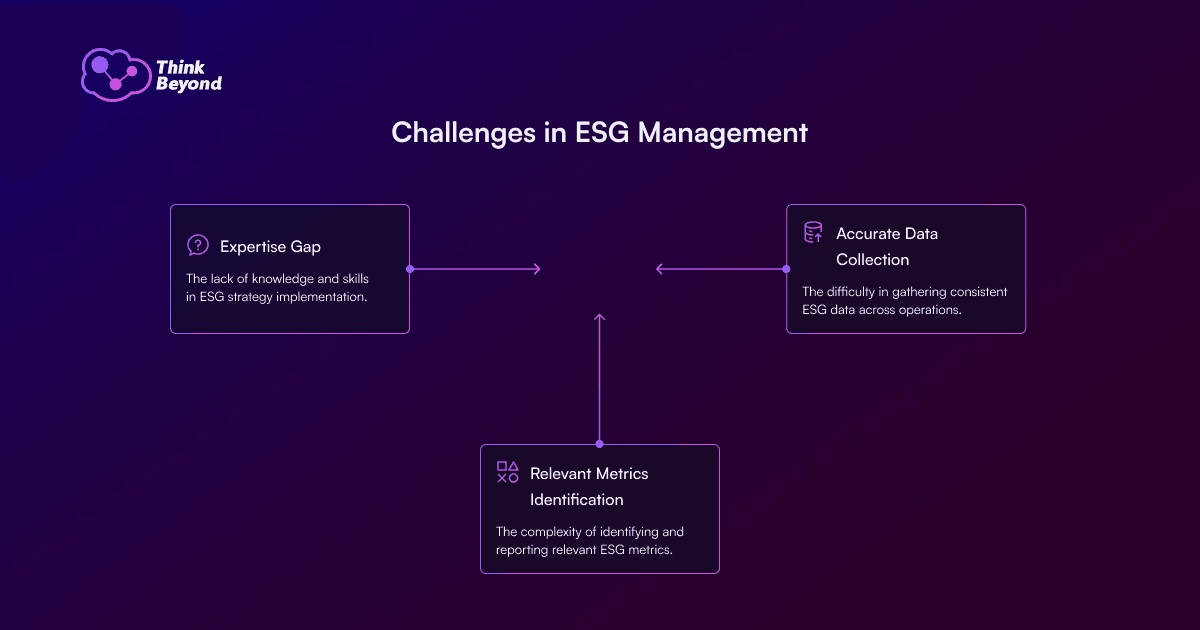
Why ESG Management Presents Difficulties
ESG administration often proves difficult because disparate systems distribute the data.
Common problems include:
- Facilities teams hold energy data.
- Teams gather supplier emissions data inconsistently.
- Finance or expense systems house travel data.
- Sites record waste and water data at different levels of detail.
- Different departments apply different definitions.
- Calculations and assumptions lack a clear audit trail.
- Staff manually consolidate data close to deadlines.
Regulation adds pressure. The European Commission states that companies subject to the Corporate Sustainability Reporting Directive must report according to European Sustainability Reporting Standards. Concurrently, EU regulators debate simplifications and scope changes for sustainability mandates, which elevates the importance of governance and readiness.
The practical lesson remains simple: organisations need adaptable data foundations as regulatory requirements evolve.
What ESG Means in Practice
ESG stands for Environmental, Social and Governance.
- Environmental covers emissions, energy, waste, water, biodiversity, resource use, and climate impact.
- Social covers workforce, wellbeing, diversity, safety, human rights, customers, and community impact.
- Governance covers leadership, controls, ethics, risk, compliance, and accountability.
In Salesforce Net Zero Cloud, the strongest product fit remains environmental and sustainability data management, especially emissions, supplier data, waste, water, and compliance workflows.
That does not make social and governance issues less important. It means organisations must clarify which ESG dimensions the platform manages directly, which it integrates, and which remain under other governance processes.
How Salesforce Net Zero Cloud Supports ESG Management
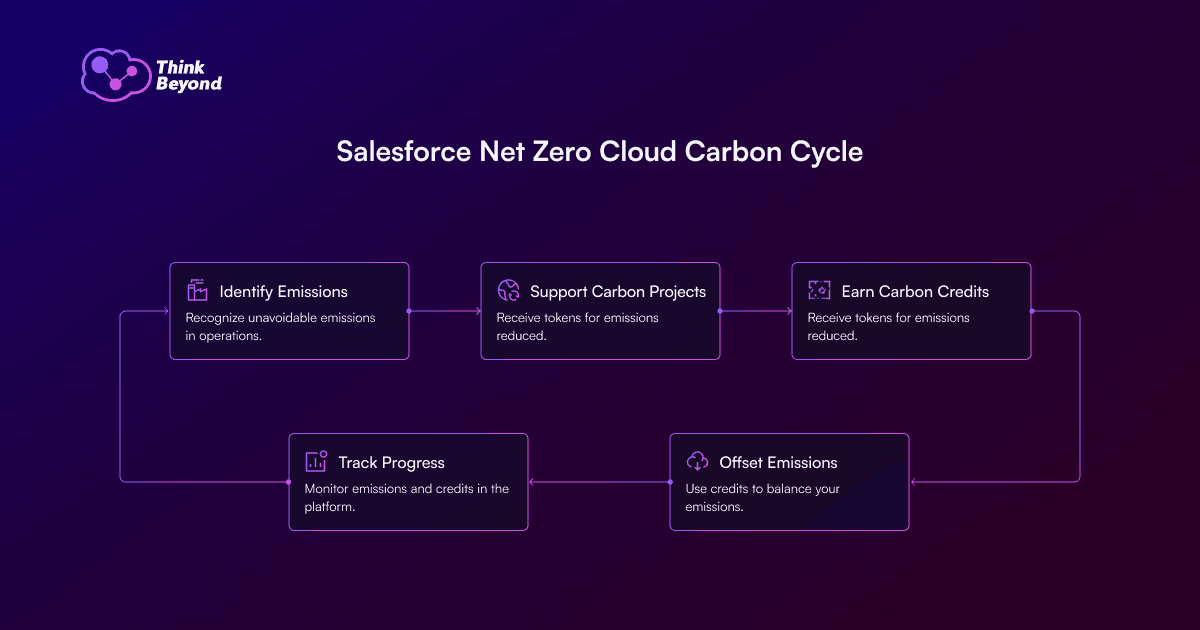
Salesforce describes Net Zero Cloud as sustainability software that pulls an organisation's sustainability data into one place, supports carbon footprint calculations, helps develop emissions reduction strategies, and aligns disclosures with current regulations and frameworks.
Scope 1, 2, and 3 Emissions
Net Zero Cloud supports environmental data collection and calculation across scope 1, 2, and 3 emissions. It helps teams convert different activity data into carbon dioxide equivalent values so they can build a more consistent carbon inventory.
This matters because emissions data originates from many sources: buildings, vehicles, purchased energy, business travel, suppliers, product activity, and operational systems.
To build operational resilience and fully capture these disparate data streams, we recommend you explore our Salesforce Integration Services to seamlessly connect your external operational software directly with your Net Zero Cloud environment.
Supplier Engagement
Scope 3 emissions often depend entirely on supplier data. Net Zero Cloud helps organisations collect supplier information and use scorecards to assess supplier progress.
When you standardise these data flows, the entire business benefits. In our work with complex supply chains at Virtana, Think Beyond delivered highly technical Salesforce solutions based directly on robust business processes. Our team ensures that data flows logically from the supply chain into the central system, an approach that perfectly mirrors the rigorous requirements for Scope 3 emissions data collection.
Waste and Water Management
Teams track waste data by type, disposal route, quantity, and emissions factors. This helps organisations understand how operational waste contributes to environmental impact. Similarly, water tools help teams understand usage across sites and activities. For organisations with water-intensive operations or dispersed facilities, this surfaces immediate reduction opportunities.
Dashboards and Forecasts
Historical reviews fall short of modern requirements. Forecast tools help teams model future emissions, compare progress against targets, and understand whether planned initiatives will close the gap.
Salesforce documentation describes Net Zero Analytics dashboards for analyses of scope 1, 2, and 3 emissions data. Dashboards help ESG leaders move from static reviews to active, daily management.
The UK Perspective on ESG Governance
For businesses operating within the United Kingdom, ESG compliance goes beyond European directives. The Financial Conduct Authority (FCA) has introduced stringent Sustainability Disclosure Requirements (SDR), while large UK-registered companies must now align their disclosures with the Task Force on Climate-related Financial Disclosures (TCFD) framework. UK organisations must ensure their Salesforce platforms can capture specific climate-related financial risks and transition plans to satisfy these domestic regulators. Net Zero Cloud provides the rigorous data structure required to meet these UK-specific statutory mandates without duplicated effort.
What Leaders Should Decide Before Implementation
Before you begin platform work, leadership must clarify:
- Which regulatory obligations and voluntary frameworks matter.
- Which entities, sites, and activities fall into scope.
- Who owns each ESG data category.
- Which systems feed sustainability data.
- Which calculations require strict auditability.
- Which supplier data currently exists.
- Which dashboards leadership needs monthly, quarterly, and annually.
- Which teams maintain data quality after go-live.
Without these decisions, ESG software easily becomes another static repository rather than a governed capability.
Metrics That Prove ESG Data Maturity
Monitor data and process maturity alongside sustainability outcomes:
- Percentage of ESG data sources with named owners.
- Completeness of scope 1, 2, and 3 emissions data.
- Number of supplier records with current emissions data.
- Time required to prepare data packs.
- Number of manual spreadsheet adjustments.
- Data quality exceptions by category.
- Forecast variance against actual emissions.
- Waste and water data completeness by site.
- Leadership dashboard usage.
These metrics prove whether your ESG administration becomes more reliable and less manual over time.
Salesforce Net Zero Cloud and CSRD Readiness
For organisations exposed to EU sustainability mandates, CSRD and ESRS have increased the need for structured sustainability data. Even if regulators change scopes, timelines, or specific requirements, the underlying operational need remains constant: companies must know where their ESG data originates, who owns it, and how they evidence their calculations.
Net Zero Cloud supports this readiness by helping teams collect, structure, calculate, and present sustainability data consistently.
Do not treat the platform as a substitute for legal interpretation, audit judgement, or sustainability strategy. It acts as a structural layer that makes those activities reliable.
Think Beyond perspective: ESG reporting fails when data ownership is unclear. The first question is not "Which dashboard do we need?" It is "Which teams own the data that makes this dashboard credible?" Explore Salesforce implementation support with Think Beyond.
How Think Beyond Helps with ESG Data Readiness
Think Beyond helps organisations shape Salesforce around governed data, workflows, and output needs. For ESG and sustainability programmes, this means we connect platform design directly with operating model decisions.
We can support:
- ESG data readiness discovery.
- Salesforce Net Zero Cloud implementation plans.
- Source-system and supplier data maps.
- Workflow design for ESG data collection and reviews.
- Dashboard and user interface design.
- Data quality governance and ownership.
- Integrations with finance, procurement, facilities, and operational systems.
Explore Your ESG Data Readiness
Talk to Think Beyond about managing ESG data in Salesforce
FAQs
How do we migrate historical emissions data into Net Zero Cloud?
Your team must first standardise historical data into compatible formats (typically CSV) before import. We strongly recommend an audit of this legacy data to identify gaps or incorrect conversion factors before you populate the new Salesforce environment.
Can Net Zero Cloud calculate Scope 3 emissions if our suppliers lack exact data?
Yes. When exact primary data from suppliers remains unavailable, Net Zero Cloud allows you to use spend-based or industry-average emissions factors. This provides a compliant baseline that you can refine later as supplier data quality improves.
Which internal systems should we integrate with Net Zero Cloud first?
Prioritise the systems that hold your most critical Scope 1 and Scope 2 data. Typically, this involves your ERP or finance systems (for utility bills and fuel spend) and HR/expense management tools (for business travel).
Does Net Zero Cloud replace the need for an external ESG auditor?
No. Net Zero Cloud structures your data and creates a transparent audit trail, which drastically reduces the time and cost associated with external audits. However, you still require certified auditors to provide independent assurance on your regulatory disclosures.
Key Public Sources Referenced