Key points:
- In a crowded higher education market, prospective students typically require up to 10 separate brand touchpoints before they feel confident enough to apply.
- To build this trust, universities must implement a robust multichannel strategy that maintains a consistent, professional presence across all digital platforms.
- Utilising advanced CRM tools, such as Salesforce, allows institutions to move away from generic messaging and deliver highly personalised content tailored to an individual’s specific interests.
- Offering diverse engagement opportunities, ranging from immersive virtual tours to proactive, automated email marketing, enhances the recruitment journey.
- Ultimately, nurturing a candidate from initial curiosity to final enrolment requires a dynamic digital approach that prioritises building a meaningful relationship at every stage.
Broadly understood, business and the education industry have more in common than you might think. The best example is the student recruitment journey and the process of acquiring customers for the company.
In business schools and companies, the basis of operations is to ensure an appropriate number of clients/students who will generate income, guaranteeing the possibility of functioning or scaling.
Both the business and the education industry demand the same rights. You will not acquire the right number of customers/students if you do not conduct an appropriate marketing campaign.
The data is absolute – in business, you need from 8 to 14 points of contact with the brand, and in education, you need up to 10 touchpoints for a candidate to decide to apply to your university.
There are three main stages illustrating the recruitment process within the sales funnel:
- Student inquiries
- Student applications
- Students admitted.
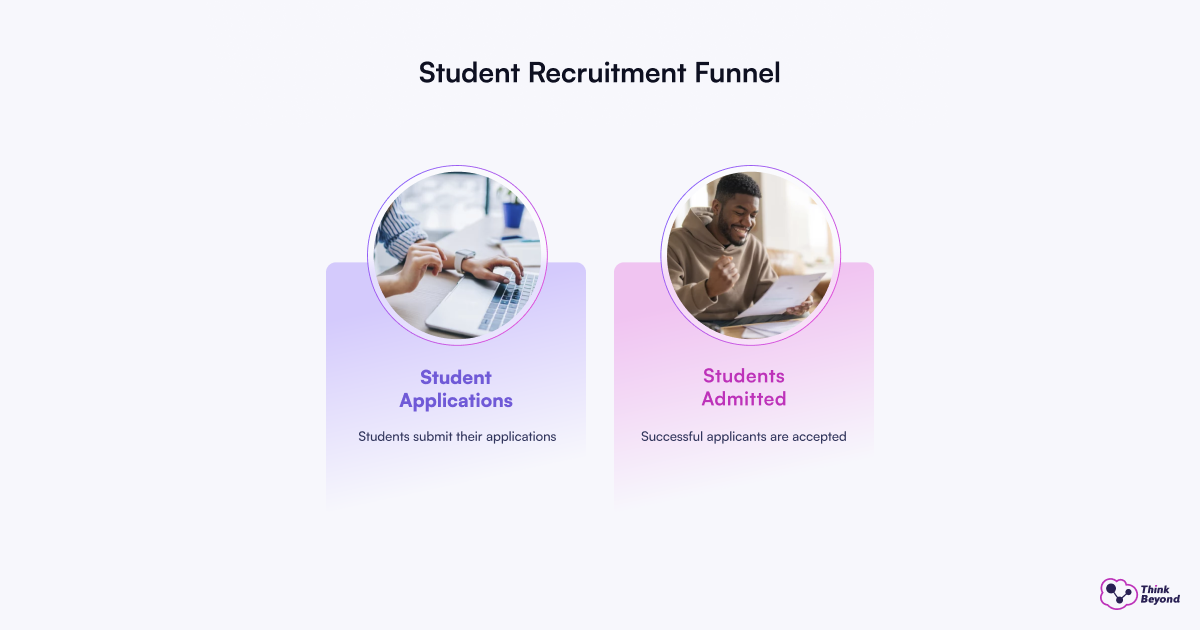
In this article, we will focus on the first stage, which is crucial for results.
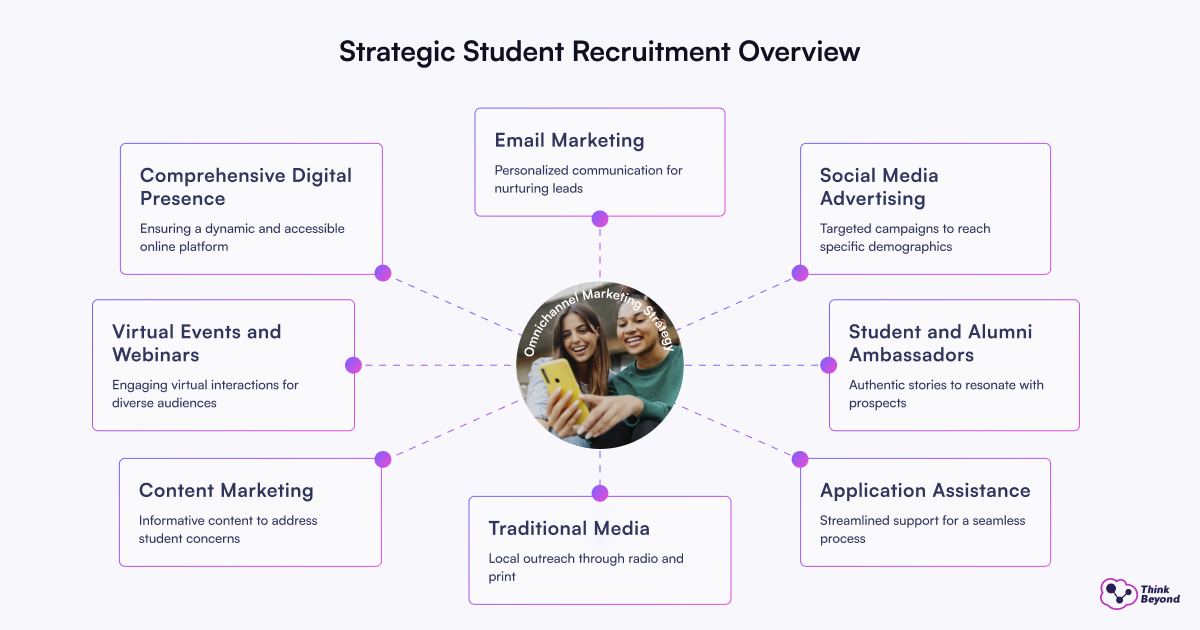
It is necessary to use omnichannel marketing to achieve the desired number of views for your university’s brand.
Moreover, you can optimise activities to increase the number of applications from potential students.
Partner with the architects behind 25+ successful university projects. From recruitment to alum relations, see how Think Beyond transforms the student lifecycle with Salesforce Education Cloud.
Why do you need so many brand touchpoints to achieve Student Recruitment success?
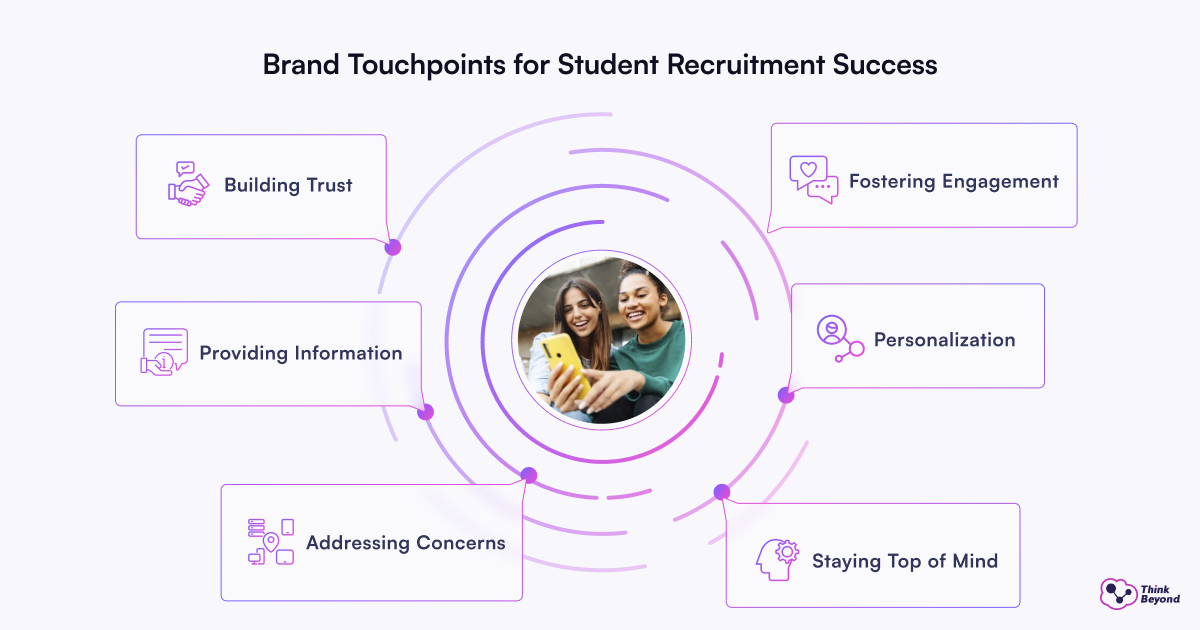
The importance of brand touchpoints in the student recruitment process cannot be overstated. These touchpoints serve as the connective tissue that binds prospective students to your institution, fostering a relationship that can profoundly influence their educational journey. Let’s delve deeper into the significance of these touchpoints:
- Building Trust and Credibility: Trust is the cornerstone of any successful relationship, and it’s no different when attracting students to your institution. Consistent, positive brand touchpoints build credibility. When prospective students encounter your institution’s brand across various channels and consistently find reliable information and support, they develop trust in your institution’s integrity and commitment to their educational goals.
- Staying Top of Mind: In today’s information-saturated world, maintaining a prominent presence in prospective students’ minds is crucial. The student recruitment process often spans months, and even years, as students research their options, evaluate programs, and make choices. Multiple brand touchpoints ensure that your institution remains at the forefront of their thoughts throughout this process. When they eventually decide where to pursue their education, your institution is more likely to be their first choice.
- Providing Essential Information: Prospective students hunger for information at every stage of their journey. From initial curiosity about program offerings to in-depth research on faculty expertise, scholarships, campus facilities, and extracurricular activities, students seek answers to myriad questions. By strategically placing brand touchpoints across their path, your institution can disseminate vital information precisely when they need it, nurturing their understanding and interest.
- Personalisation: Every prospective student is unique, with distinct aspirations, interests, and concerns. Multiple brand touchpoints enable your institution to tailor its messaging and content to specific groups or even individuals. Personalisation goes a long way in making prospective students feel valued and understood, enhancing their connection with your institution.
- Addressing Concerns and Queries: The decision to pursue higher education is a significant one, often accompanied by questions, doubts, and apprehensions. Effective brand touchpoints offer opportunities to address these concerns promptly and comprehensively. Whether through responsive social media engagement, informative webinars, or one-on-one communication, you can actively alleviate uncertainties and provide reassurance.
- Fostering Engagement and Interaction: Engagement is a vital aspect of the recruitment journey. Multiple brand touchpoints disseminate information and encourage prospective students to interact and engage with your institution. Webinars, virtual campus tours, and information sessions offer platforms for meaningful engagement, allowing students to connect with faculty, staff, and current students and gain a deeper understanding of what your institution offers.
In conclusion, the power of brand touchpoints in student recruitment lies in their ability to nurture relationships, instil trust, and provide essential information. An effective multichannel approach ensures that your institution remains visible, relevant, and responsive throughout the student’s journey. By strategically designing and optimising these touchpoints, universities and colleges can create a compelling, lasting impression that attracts top talent.
Omnichannel marketing strategy for Student Recruitment
Leveraging multiple touchpoints has emerged as a cornerstone strategy for universities and colleges seeking to attract the most promising talent. These touchpoints serve as strategic nodes along the intricate web of student engagement, facilitating meaningful interactions and influencing critical decisions. Let’s delve into the myriad facets of why and how institutions can effectively harness the power of multiple touchpoints in their recruitment endeavours:
Comprehensive Digital Presence: A robust online presence is indispensable. Universities and colleges must ensure their websites are not just static repositories of information but dynamic hubs that cater to prospective students’ evolving needs. Regularly updated content, intuitive navigation, and responsive design are essential elements. Furthermore, institutions should embrace SEO (Search Engine Optimisation) strategies to ensure their web content ranks high in search results, increasing visibility among potential applicants.
Email Marketing: Email remains a potent tool for personalised communication with prospective students. Segmenting your email lists by factors such as interests, academic goals, and geographic location lets you tailor messages to specific groups. Additionally, automated email workflows can nurture leads over time, delivering the right information at the right stage of their decision-making process.
Virtual Events and Webinars: The advent of virtual events and webinars has opened up new avenues for engagement. Hosting virtual campus tours, information sessions, and webinars on topics of interest to prospective students creates opportunities for meaningful interactions. These events can cater to diverse audiences, from high school seniors seeking general information to graduate students with specific academic queries.
Social Media Advertising: Paid social media advertising enables institutions to reach a broader audience and target specific demographics. By utilising platforms such as Facebook, Instagram, and LinkedIn, universities can create targeted campaigns to retarget individuals who have previously shown interest in their programs or institution. This ensures that your institution remains on the radar of potential applicants.
Content Marketing: Content is king in the digital realm, and universities can harness its power to engage and inform. Implementing a comprehensive content marketing strategy involves producing a variety of content types, including blog posts, articles, videos, and infographics. These pieces should address common questions and concerns of prospective students, offering valuable insights into programs, campus life, financial aid, and more.
Student and Alumni Ambassadors: Enlist current students and alums as brand ambassadors. Their firsthand experiences and authentic stories can resonate strongly with prospective students. Encourage them to share their journey through social media, create video testimonials, or participate in virtual Q&A sessions. Their insights and relatability can be incredibly persuasive.
Traditional Media: While digital channels dominate the modern marketing landscape, traditional media channels should not be overlooked, especially for targeting local markets. Radio, print advertisements, and participation in local events can still play a significant role in reaching certain segments of the prospective student population.
Application Assistance: Streamlining the application process and providing readily available support are crucial touchpoints. Universities can guide online chat support, dedicated admissions helplines, or comprehensive FAQ sections on their websites. Ensuring that applicants can navigate the application process seamlessly is vital in preventing potential hurdles from deterring them.
Learn how building a modern, mobile-ready recruitment platform led to a 20% increase in candidates by optimizing every interaction in the enrollment funnel.
Salesforce’s role in the omnichannel marketing strategy for Student Recruitment
Let’s explore how Salesforce can enhance the power of omnichannel marketing in expanding brand touchpoints for student recruitment:
Centralised Data Management
Salesforce serves as a robust repository for student data, encompassing information from various touchpoints. It allows institutions to store, organise, and access data efficiently. This centralised database ensures that every interaction, whether through email, social media, or events, is informed by a comprehensive understanding of the prospective student’s history and preferences.
Automation and Workflow Optimisation
Salesforce offers powerful automation capabilities that streamline communication and engagement across channels. Institutions can set up automated workflows that trigger personalised messages based on a student’s behaviour. For instance, if a student attends a webinar, Salesforce can automatically send a follow-up email with related content, further enriching the engagement.
Segmentation and Targeting
Salesforce enables precise audience segmentation. Institutions can create tailored marketing campaigns for specific student segments based on factors like academic interests, geographic location, or engagement history. This granular targeting ensures that each touchpoint is relevant to the recipient, increasing the likelihood of positive responses.
Multichannel Campaign Management
Salesforce’s campaign management features facilitate the orchestration of multichannel marketing campaigns. Institutions can plan, execute, and monitor campaigns across email, social media, webinars, and other channels within a unified platform. This cohesive approach ensures that every campaign resonates with the overall recruitment strategy.
Real-Time Analytics and Reporting
Salesforce provides real-time analytics and reporting tools that offer insights into the performance of each touchpoint and campaign. Institutions can track metrics such as email open rates, webinar attendance, and social media engagement. These insights empower data-driven decision-making, allowing for agile adjustments to the marketing strategy based on what’s working best.
Personalised Communication
Salesforce’s robust data capabilities enable deep personalisation. Institutions can create dynamic content that adapts to each student’s unique journey and interests. Whether it’s tailoring emails, customising event invitations, or recommending specific programs, this level of personalisation enhances the effectiveness of every touchpoint.
Cross-Device and Cross-Channel Tracking
Salesforce allows tracking of student interactions across devices and channels. This capability is crucial in understanding how students move seamlessly between touchpoints. It ensures that, no matter where or how a student engages, their journey remains cohesive, with each touchpoint building on the previous ones.
Integration with External Tools
Salesforce can integrate with other marketing tools and technologies, enhancing the omnichannel experience. For example, it can seamlessly connect with marketing automation platforms, social media management tools, and webinar software, ensuring a seamless flow of data and communication.
Predictive Analytics
Salesforce’s predictive analytics capabilities can forecast which touchpoints are likely to yield the best results for specific student segments. This proactive approach enables institutions to allocate resources more effectively, ensuring they invest in the touchpoints most likely to drive conversions.
Scalability
Salesforce is highly scalable, making it suitable for institutions of all sizes. Whether you’re a small college or a large university, you can tailor Salesforce to your specific needs, accommodating the growth and evolving requirements of your student recruitment efforts.
The UK Context: Navigating a Shifting Landscape
The UK higher education sector is currently navigating a uniquely challenging recruitment environment. To succeed, universities must adapt their communication strategies to address several key factors:
- Policy and Visa Changes: From January 2024, new Home Office regulations restricted most international postgraduate students from bringing dependents to the UK. This shift has made international candidates more cautious, requiring universities to provide clearer, more reassuring information throughout the recruitment journey to maintain the UK’s global appeal.
- A “Value-First” Mindset: Amid a persistent cost-of-living crisis, students’ perceptions of “value for money” are under intense scrutiny. The 2024 Student Academic Experience Survey highlights that financial concerns are a primary driver of student stress. Every touchpoint must now explicitly demonstrate the university’s return on investment, with a focus on career outcomes and long-term employability.
- The UCAS Cycle vs Year-Round Engagement: Although 2024 saw record numbers of UK 18-year-olds accepting university places, the market remains highly competitive. While the UCAS “equal consideration” deadline is a fixed milestone, the decision-making process starts much earlier. Universities must maintain a constant, supportive presence well before the application window to capture early interest.
- Transparency and Trust: In a volatile market, “policy signals” can create significant uncertainty for prospective students. The “ten touchpoints” strategy is no longer just a marketing theory; it is a vital tool for providing the transparency and stability needed to convert a hesitant lead into a confident enrollee.
For UK universities to thrive, their recruitment journey must move beyond simple brand awareness to offer a highly personalised, informative, and supportive experience at every stage of the funnel.
Student Recruitment Journey – summary
In the article, we highlighted the importance of the student recruitment process for the proper functioning of universities (from a business perspective).
Building trust, staying in the spotlight, and providing potential students with important information are key aspects of a properly conducted first stage of the recruitment process.
The student recruitment process is not linear but a dynamic, evolving path, underscoring the need for a differentiated approach to reach and engage students effectively.
Universities must make data-driven decisions, analysing the effectiveness of touchpoints and adapting strategies accordingly.
Salesforce provides a robust infrastructure that enables institutions to orchestrate and optimise their omnichannel marketing strategies seamlessly.
By centralising data, automating processes, and fostering personalised communication, Salesforce empowers universities and colleges to create cohesive and highly effective student recruitment campaigns.
With Salesforce as a cornerstone, institutions can integrate diverse touchpoints, from email and social media to webinars and mobile apps, into a unified recruitment ecosystem that cultivates meaningful connections with prospective students.
This CRM platform streamlines student data management and provides data-driven insights, enabling institutions to adapt and refine their strategies in real time.
As the recruitment landscape continues to grow in complexity, integrating Salesforce into an omnichannel marketing approach becomes an invaluable asset, enabling institutions to stay competitive and achieve their recruitment goals.
FAQ
Why are multiple touchpoints so important in student recruitment?
Multiple touchpoints are crucial for building trust, increasing brand visibility, and delivering the right information to prospective students at every stage of their decision-making process. Repeated, positive interactions keep your institution top of mind and help address candidates’ questions and concerns effectively.
How should the messaging change to address the “Value for Money” concerns of UK domestic students?
According to the 2024 Student Academic Experience Survey, financial pressure is the primary concern for UK students. To cut through the noise, your touchpoints must lead with “Return on Investment” (ROI). Move beyond lifestyle marketing and ensure your automated emails and social ads highlight tangible outcomes: local employer partnerships, industry-specific career support, and transparent cost-of-living guidance. In a “value-first” market, students don’t just want a degree; they want a clear path to a career.
What are the key stages of the student recruitment funnel?
The recruitment journey typically consists of three main stages: student inquiries, student applications, and students admitted. Each stage requires different communication strategies and touchpoints to move candidates closer to enrolment.
How can universities use omnichannel marketing to improve recruitment outcomes?
Omnichannel marketing leverages a mix of digital presence, email, social media, webinars, events, and traditional media, ensuring prospective students encounter the university brand in engaging, personalised ways. This increases the effectiveness of recruitment campaigns and drives higher application numbers.
What role does Salesforce play in managing student recruitment touchpoints?
Salesforce acts as a centralised platform for student data, campaign management, automation, segmentation, personalised communication, and analytics. It enables universities to orchestrate tailored, data-driven campaigns across multiple channels, track engagement, and optimise recruitment strategies in real time.